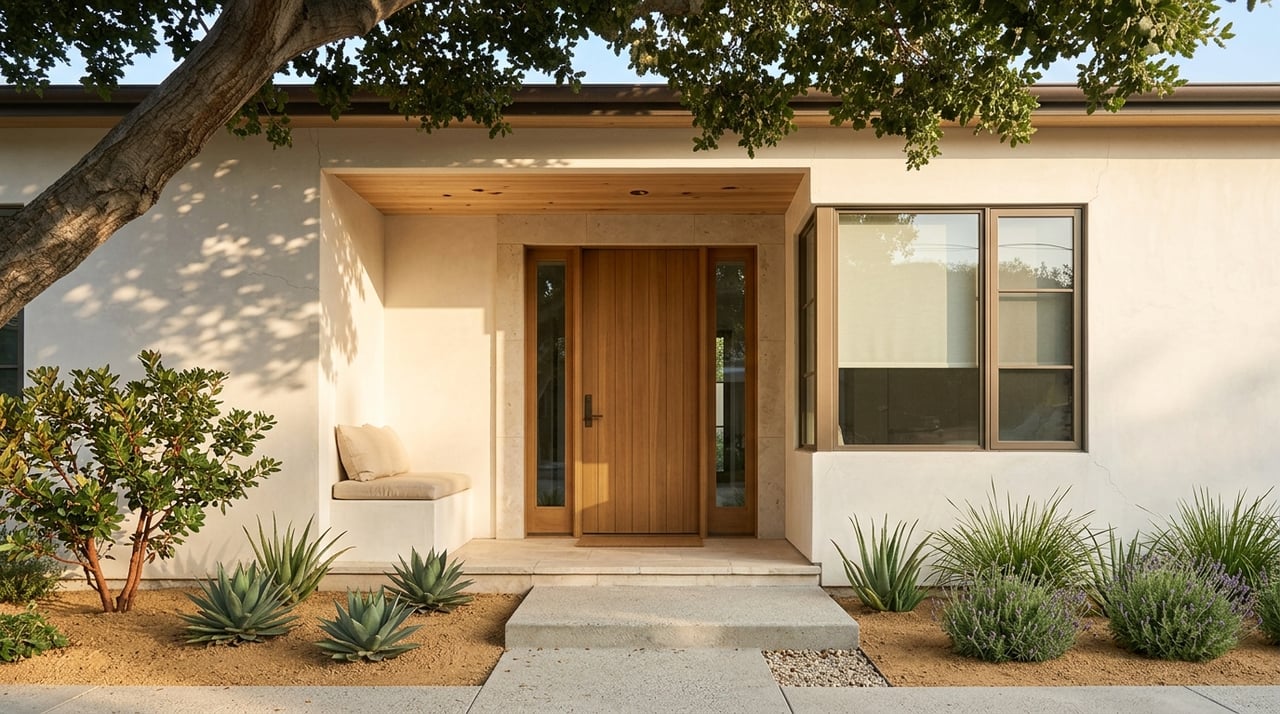
Comparing Carmel Valley New vs Older Homes
July 2, 2026
July 2, 2026
If you are deciding between a newer build and an established street in Carmel Valley, you are not just comparing home age. You are comparing two different day-to-day living patterns inside a community that was built in phases over time. The good news is that Carmel Valley gives you both options, and each can be a strong fit depending on what matters most to you. Let’s break down how newer sections and established streets differ so you can narrow your search with more confidence.
Carmel Valley is a master-planned community along the Interstate 5 corridor, with a community plan adopted in 1975 and the first homes built in 1983. From the start, the plan concentrated development on mesa tops while leaving canyons and open space largely untouched. That long rollout helps explain why Carmel Valley does not feel like one single housing product.
Today, the community includes offices, hotels, shopping, restaurants, neighborhood parks, a recreation center, open space, trails, a fire station, a police station, and a library. In practical terms, that means your experience can shift quite a bit depending on which pocket of Carmel Valley you choose. One area may feel more mature and layered, while another may feel more recent and intentionally compact.
When buyers talk about newer-build living in or near Carmel Valley, Pacific Highlands Ranch is usually the clearest comparison. The city adopted its community plan in 1999 and describes it as one of San Diego’s newest residential developments. The plan also preserves about half of its 2,650 acres as open space.
Pacific Highlands Ranch was designed around a sustainable, walkable pattern with a village center that brings together neighborhood shopping, restaurants, entertainment, housing, and a civic meeting place. The city also notes drought-tolerant landscaping and photovoltaic solar panels. If you are drawn to a more current planning model, this is often the kind of environment you are picturing.
Older Carmel Valley neighborhoods grew in phases after 1983, so the housing stock is typically more mixed in age and product type. Planning documents for Neighborhood 8 show a range that includes single-family homes, multifamily areas, and very low-density pockets. Some enclaves also include golf-course frontage, perimeter fencing, greenbelts, and private recreational amenities.
Lot patterns vary too. Some residential zones identify minimum lot sizes as low as 3,000 to 4,500 square feet, while other nearby pockets are described as 1+ acre lots. For you as a buyer, that means established streets may offer more choice in home style, lot size, and overall feel from one block to the next.
The biggest difference between newer builds and established streets is usually not a strict architectural rule. It is the era of development and the planning style behind it. Newer sections tend to feel more uniform and contemporary because they were created around a tighter, more coordinated vision.
Established streets often feel more individualized and more settled. Because Carmel Valley developed in phases, you may notice greater variation in home types, street rhythm, and lot layout. If you enjoy a neighborhood that feels less uniform, older sections may stand out for that reason alone.
One of the most important practical differences is governance. HOA and assessment structures are not uniform across Carmel Valley, and that matters when you are comparing monthly costs, architectural rules, and ownership responsibilities.
In Pacific Highlands Ranch North, the HOA covers ten communities north of the bridges at Pacific Highlands Ranch Parkway, Lopelia Meadows Place, and Golden Cypress Place, and the association handles architectural matters and new-resident orientation. The city also maintains a Public Facilities Financing Plan and Facilities Benefit Assessment for Pacific Highlands Ranch that covers transportation, park and recreation, library, and water and sewer projects.
By contrast, older Carmel Valley streets should be evaluated tract by tract. Carmel Valley planning documents require individual Precise Plans before certain development actions, which helps explain why one area may operate very differently from the next. If you are comparing homes across multiple neighborhoods, it is smart to review each property’s HOA structure and any related assessments individually rather than assume consistency.
Established Carmel Valley has a broad amenity network that many buyers appreciate right away. The city highlights neighborhood parks, a community recreation center, open spaces with hiking and equestrian trails, shopping areas, and restaurants. It also notes that development was centered around the Del Mar Highlands Shopping Center.
The city lists parks including Ashley Falls, Carmel Creek, Carmel Del Mar, Sage Canyon, Solana Highlands, and Torrey Hills. The area also includes a library and skate park, which adds to the sense of an already-built daily routine. If you value a neighborhood where civic and recreational amenities have been part of the landscape for years, this pattern may feel especially convenient.
The Carmel Valley Library opened in 1993, and the Carmel Valley Recreation Center and pool were built in 1999 on Townsgate Drive. Those long-standing civic anchors help explain why central and western Carmel Valley often feel more settled. For many buyers, that maturity shows up in the rhythm of everyday life more than in any one feature.
Pacific Highlands Ranch offers a newer and more concentrated amenity setup. Its recreation center opened in 2019 on a 20-acre site and includes a gym, multipurpose rooms, outdoor courts, fields, a pump track, a skate park, dog parks, and picnic and barbecue areas.
The Pacific Highlands Ranch Library opened as the newest San Diego Public Library branch as of 2024. It is an 18,000-square-foot LEED Silver building with a community room, study rooms, an IDEA Lab, and outdoor gathering areas. If you want newer public spaces and a community core planned with walkable connections in mind, that can be a major draw.
When buyers say they want walkability, the definition can change depending on the part of Carmel Valley they are considering. In Pacific Highlands Ranch, walkability is closely tied to the village-center concept and the concentration of amenities. In established Carmel Valley, it is often more about access to a mature network of parks, shopping areas, library services, and recreation spaces.
There is another useful detail to keep in mind. According to the city, neither the Carmel Valley Recreation Center nor the Pacific Highlands Ranch Recreation Center is accessible by public transit. That makes internal neighborhood layout more relevant than bus access when you compare how convenient a location feels day to day.
If you are deciding between newer builds and established streets, it helps to focus less on which is “better” and more on which matches your lifestyle and ownership goals. Carmel Valley’s phased development means both can be excellent choices, but for different reasons.
As you tour homes, try to compare more than finishes and square footage. In Carmel Valley, the better question is often how each micro-location supports the way you want to live.
Here are a few smart comparison points to keep in mind:
Carmel Valley can look simple on a map, but it often feels very different block by block. That is especially true when you compare newer master-planned sections with older streets that developed over time under separate planning documents.
For buyers, that means broad assumptions can be misleading. A neighborhood that looks similar online may carry different HOA structures, lot patterns, or amenity access once you dig in. A local, neighborhood-level comparison can save you time and help you focus on the areas that truly match your priorities.
If you are weighing a newer build against an established Carmel Valley street, the right choice usually comes down to your routine, your comfort with governance and fees, and the type of neighborhood character you want to come home to. If you want help comparing specific Carmel Valley pockets with a local perspective, FW Property Group can help you sort through the tradeoffs and find the best fit.
Stay up to date on the latest real estate trends.
We pride ourselves in providing personalized solutions that bring our clients closer to their dream properties and enhance their long-term wealth. Contact us today to find out how we can be of assistance to you!