La Jolla's Bluff-Top Market Just Split in Two, and the Listing Photos Won't Tell You Which Side You're On
July 23, 2026
July 23, 2026
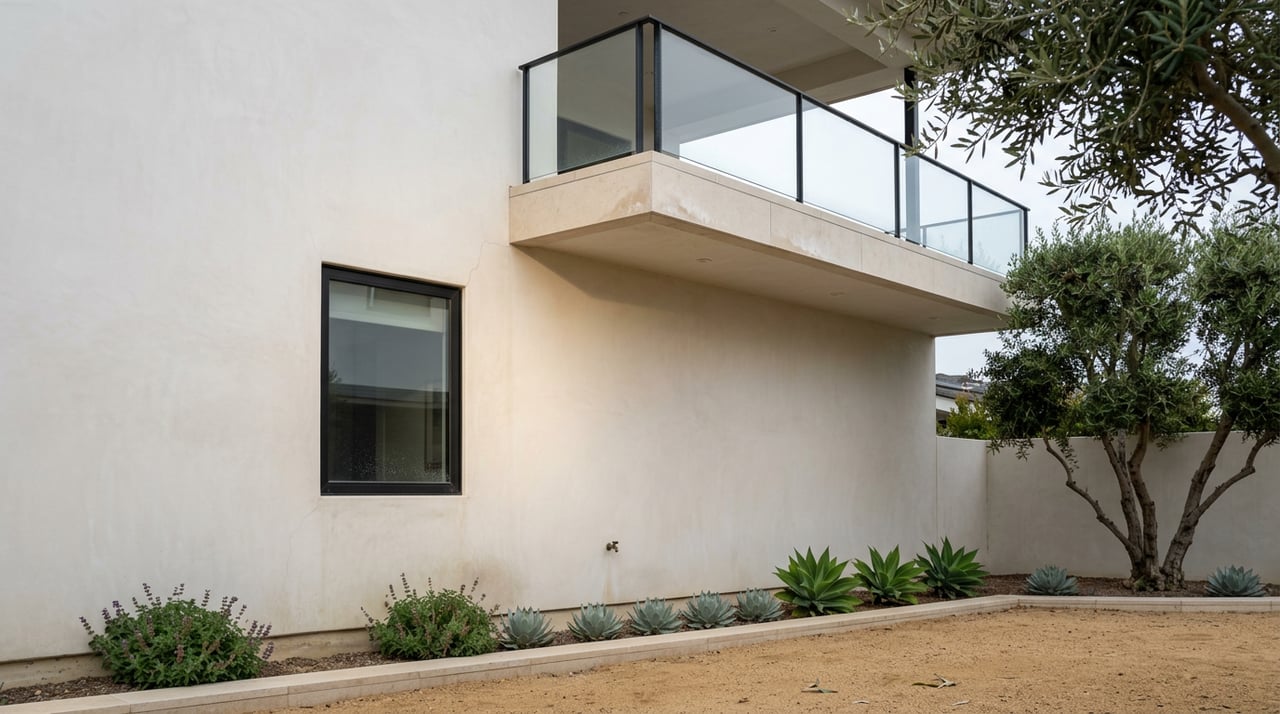
Two homes on the same La Jolla bluff, same view corridor, same floor plan on paper. One is priced at a premium the buyer cannot explain from the MLS remarks. The other has sat. The gap is not staging, and it is not the agent's marketing budget. It is a date on a building permit and a line item in a preliminary title report, and after July 1, 2026, that gap is going to widen.
The July 2026 coastal bluff setback update is being written up around town as a technical revision. It is not. It quietly separated La Jolla's bluff-top inventory into two priced tiers that share a zip code but very little else, and buyers who read the two homes as comparable are the ones writing checks they will regret at the geotechnical review.
The mechanical change is straightforward. San Diego Municipal Code Section 143.0143(f) establishes a baseline 40-foot setback from the coastal bluff edge, but the actual required setback adds anticipated bluff retreat over the structure's 75-year design life plus safety factors, so under previous guidance total setbacks typically ran 53 to 55 feet. The July 1, 2026 implementation, incorporating the California Coastal Commission's November 2024 Sea Level Rise Policy Guidance, increases total setbacks to 63 to 64 feet, a 9 to 10 foot increase.
That nine to ten feet is where the reprice happens. On a constrained La Jolla bluff lot, the financial impact typically includes reduced buildable area of 10 to 15%, which on premium coastal properties represents $50,000 to $150,000 in reduced project value. On a $6M–$14M La Jolla parcel, that number is closer to a rounding error than a headline. The bigger repricing is the one that does not show up in a spreadsheet.
Here is the friction that surfaces in escrow, not in the listing description. Under the California Coastal Act, seawalls and other shoreline protective devices are permitted when required to protect existing structures in danger from erosion, and in 2026 the Coastal Commission interprets "existing" as structures lawfully constructed prior to January 1, 1977. Post-1977 homes and substantially remodeled properties generally have no guaranteed right to a seawall.
Translation for a buyer: two homes at the same bluff-top address can hold very different long-term development rights, and neither the tax records nor the MLS field for "year built" tells you which is which. A 1962 cottage that was substantially remodeled in 2004 may have lost its grandfathered armoring rights on the day the last building permit finaled. A neighbor's untouched 1969 ranch, ugly kitchen and all, may have kept them.
For a buyer whose plan is to knock the place down and rebuild, the older, uglier home is often the more valuable dirt. That is a counterintuitive market signal, and it is the thesis of this post: in La Jolla in 2026, the smart bluff-top buyer is not paying for the house. They are paying for the permit history that came with it.
Existing structures built under previous regulations are typically considered legally nonconforming and can remain in place, but substantial improvements, generally defined as work exceeding 50% of the structure's value, may trigger requirements to bring the structure into compliance with current setbacks. That threshold is the trap door. A buyer who closes on a pre-1977 home planning a "cosmetic refresh" that quietly crosses 50% by valuation is not remodeling. They are surrendering the seawall right, resetting the setback clock to the 63 to 64 foot standard, and pushing the buildable envelope another ten feet inland from the edge that sold them the view.
This is why every serious bluff-top buyer in La Jolla, Bird Rock, and La Jolla Shores should be commissioning the same two studies before waiving the inspection contingency, not after:
| Study | Timing | Typical Cost | What It Tells You |
|---|---|---|---|
| Coastal geotechnical bluff-stability assessment | Pre-offer or contingency | $8,000 to $40,000 depending on site complexity, borings, and lab analysis | Real buildable envelope after 75-year retreat and factor-of-safety math |
| Permit history and substantial-remodel audit | Contingency period | Legal review fees | Whether the pre-1977 seawall right survived the last renovation |
Completeness review takes up to 4 weeks and geotechnical reports take 4 to 8 weeks, which means a standard 17-day investigation window in a California purchase contract is not enough for a bluff property. Extending it is a term worth negotiating harder than the price.
The other quiet change in the July update is that comps across the La Jolla shoreline no longer share a denominator. The July 1, 2026 implementation shifts from broad regional erosion averages to segment-specific rates for Pacific Beach, La Jolla, and Bird Rock. Previous guidance relied on coastline-wide averages that masked substantial variation in local bluff stability and wave exposure. Terrestrial laser scanning surveys along the San Diego coast between La Jolla and Encinitas documented linear rates of seacliff retreat ranging from 3.1 to 13.2 centimeters per year, with a weighted average of 8.0 cm/yr for the littoral cell, but this regional average conceals critical neighborhood-level differences.
What that means in the field:
Two listings a quarter-mile apart can produce buildable envelopes that differ by 15%. Any pricing model that treats them as comps is quietly wrong.
The other 2026 headline was legal, not geologic. On April 23, 2026, the California Supreme Court issued a unanimous 7-0 decision that fundamentally reshapes the balance of power between the California Coastal Commission and local governments. Coverage framed it as a win for coastal owners, and in narrow ways it is.
The Supreme Court ruling doesn't change bluff physics or sea level rise, only the Commission's procedural authority to override local approvals.
For a La Jolla buyer, that distinction is the entire story. City of San Diego approval now carries more weight against a Commission override, but the substantive standards embedded in the certified Local Coastal Program, the 75-year design life, the geotechnical monitoring plan with five-year inspection intervals, the segment-specific erosion rates, all still apply. A recent local example makes this concrete: the April 15, 2026 La Jolla Development Permit Review Committee evaluated a 4,388-square-foot bluffside remodel that expanded an existing 1,957-square-foot Bird Rock home. That kind of scope now requires the full geotechnical package regardless of who has final procedural authority.
If you are selling a bluff-top La Jolla home in the second half of 2026, the buyer's agent is going to ask questions the standard TDS does not prompt. Getting ahead of them is a pricing tool.
None of this is glamorous. All of it lets a buyer's coastal attorney close the file in a week instead of six, which is the difference between a clean offer and a retraded one.
Does the July 2026 update apply to a home I already own? Existing legally-permitted structures remain in place. The new setbacks bind new development, additions, and projects that cross the substantial-improvement threshold.
If a home has a seawall, does that reduce the required setback for a rebuild? No. Solana Beach's LUP explicitly prohibits it and Encinitas and Coastal Commission practice routinely reject it, and San Diego LCP policy does not allow bluff-retention devices to be factored into setback calculations either.
Is the 40-foot minimum still meaningful? It is the floor, not the answer. Site-specific geotechnical work almost always pushes the number well past it, which is why a pre-offer bluff-stability assessment is the single highest-value line item in due diligence.
How long should I budget for a bluff-top Coastal Development Permit? Typical Development Services review times run 3 to 4 months for routine projects and 5 to 8 months for complex hillside or coastal bluff projects, before construction begins.
Bluff-top real estate in La Jolla has never rewarded shortcuts, and 2026 raised the price of taking one. If you are evaluating a purchase, a sale, or a renovation on the bluff, FW Property Group can walk you through the specific parcel, the permit file, and what the segment data says about the ground your future home is standing on. Request your free home valuation to start the conversation.
Stay up to date on the latest real estate trends.
We pride ourselves in providing personalized solutions that bring our clients closer to their dream properties and enhance their long-term wealth. Contact us today to find out how we can be of assistance to you!