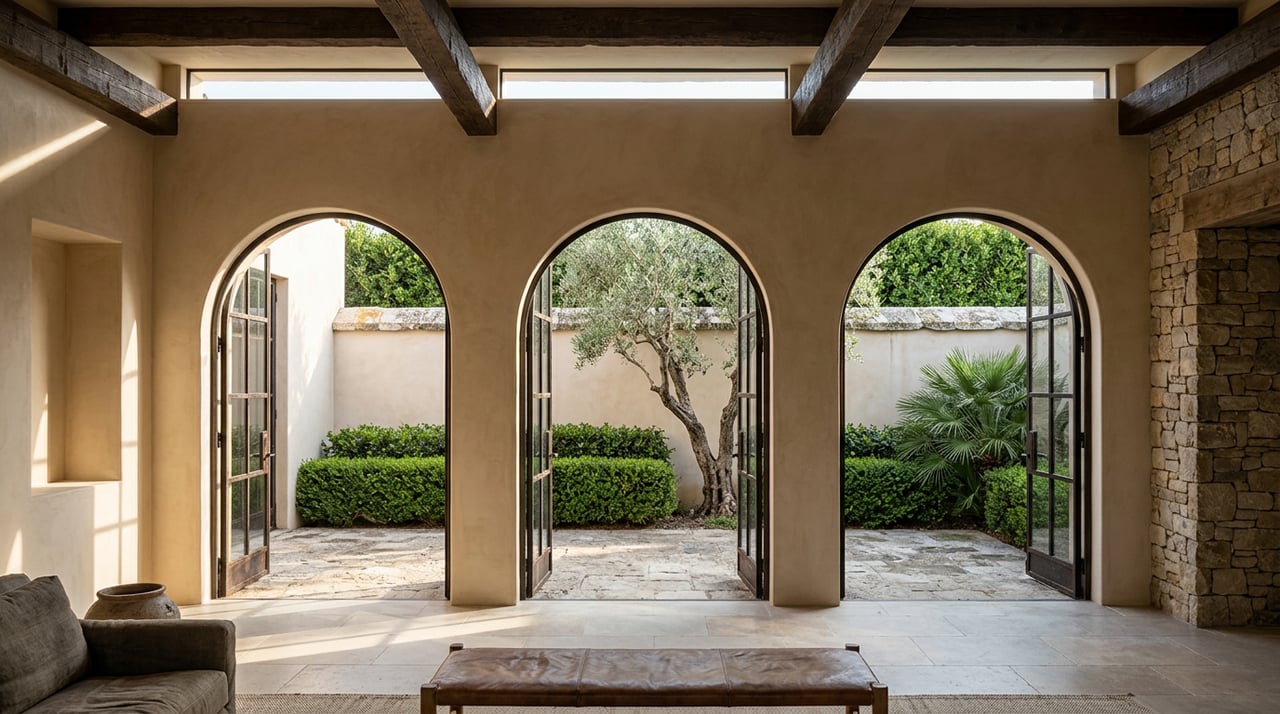
In Rancho Santa Fe, Your HOA Bill Is a Percentage of Your Purchase Price, Not a Flat Fee
September 17, 2026
September 17, 2026
Two neighbors on the same street in the Rancho Santa Fe Covenant belong to the same association, ride the same trails, and have the same standing to join the same golf club. One of them pays roughly three times more in annual dues than the other. Neither has done anything wrong. The difference is simply when each of them bought.
That is not a metaphor for how exclusive the neighborhood feels. It is how the Rancho Santa Fe Association's assessment formula actually works, and it is the single detail that most buyers comparing Rancho Santa Fe to Del Mar, La Jolla, or Carmel Valley never see coming until it shows up on a closing statement.
Almost every homeowners association in California charges the same thing to every household, whether that is a flat monthly fee or a rate tied to lot size or unit square footage. The Rancho Santa Fe Association does something different. For fiscal year 2026, it assessed every member property at $0.15 per $100 of county-assessed value, or 0.15 percent of that assessed value, according to the association's own published finances. That is a rate applied against the number on your property tax bill, not a fee set by the size of your lot or the length of your driveway.
Here is why that single design choice changes the math for anyone comparing Rancho Santa Fe to other North County luxury enclaves. California's Prop 13 framework resets a property's assessed value to something close to market price at the moment of sale, then caps how much that assessed value can climb each year the owner keeps the house. A neighbor who bought in the 1990s might be sitting on an assessed value a fraction of today's market price. A buyer closing this year gets reassessed near the actual purchase price. Because RSFA dues are pegged directly to that assessed value, the two households end up paying dramatically different amounts for identical access to the golf club, the tennis club, the security patrol, and the trail network.
Run the math yourself using the current rate:
| Assessed Value | Annual RSFA Assessment | Monthly Equivalent |
|---|---|---|
| $1,000,000 | $1,500 | $125 |
| $2,000,000 | $3,000 | $250 |
| $4,000,000 | $6,000 | $500 |
| $8,000,000 | $12,000 | $1,000 |
| $15,000,000 | $22,500 | $1,875 |
Active Covenant listings carried a median list price of about $8.1 million as of June 30, 2026. If your purchase lands anywhere near that figure, expect dues closer to the bottom two rows of that table, not the community average.
Independent tracking of the association's finances puts the current average at about $408 per month across the roughly 2,044 member properties, drawing on a total assessment pool of about $10 million against a $33 million annual operating budget. That average is true and almost useless for planning purposes. It blends decades-old assessed values against fresh ones, so it tells you what the community pays collectively, not what you will pay individually.
The distinction matters because the association's total budget does real work. It funds an 18-hole golf course, tennis courts, roughly 65 miles of horse trails, a private security patrol, and a community clubhouse restaurant that runs at a deficit every year, with about $500,000 in assessment funds used annually to cover that shortfall. None of that changes based on who is paying. What changes is how much of the bill lands on your household specifically, and that number is a function of your purchase price, not the community's amenities.
One more wrinkle catches buyers moving from elsewhere in coastal San Diego. RSFA does not bill monthly. Assessments are split into two installments tied to the county tax calendar, with the first due by November 1 and the second by April 20. Pay both together by early December and the association knocks 3 percent off the second installment. Miss either deadline and penalties stack quickly, starting at 8 percent on the first installment and compounding with interest after July 1. If you are used to a predictable monthly HOA charge from a Carmel Valley or Carlsbad community, plan for a semi-annual bill instead.
Once you understand that Rancho Santa Fe dues scale with what you paid rather than what you get, the widely quoted "median home price" for the neighborhood starts to look like the same problem wearing a different hat.
Rancho Santa Fe's zip codes cover the historic Covenant, Fairbanks Ranch, The Crosby, and Rancho Santa Fe Farms, each governed by its own set of rules and each drawing a different buyer. A single median blends a Village-area home against a ten-acre compound, which is why national data sources routinely disagree with each other on basic direction. Tracking the three months ending May 2026, one source put the median sale price at $3.9 million, down 21.9 percent from the same period a year earlier. A separate home value index, which smooths for that kind of noise by tracking estimated values across the whole housing stock rather than just closed sales, put the typical Rancho Santa Fe home at $4,487,521 as of July 31, 2026, up 5.7 percent over the past year. Both figures came from real data. Neither described the same slice of the market.
Part of the disagreement comes down to volume. Rancho Santa Fe recorded only 13 home sales in May 2026, down from 19 in May 2025. In a market that thin, a single $15 million estate closing or falling out of escrow can swing the monthly median by hundreds of thousands of dollars. Inside the Covenant specifically, active listings carried a median list price of $8,149,000 as of June 30, 2026, a figure that has little in common with the blended zip-code number appearing on general search results.
Price per square foot across all of Rancho Santa Fe ranges from around $416 to more than $2,200 depending on the community and the specific property, a spread wider than almost anywhere else in North County.
That spread is not noise. It is the same lesson as the HOA dues: a single average number cannot describe a market built from enclaves that do not compete for the same buyer.
Buyers planning to update or expand a Covenant property should build the review process into their timeline from day one. The Rancho Santa Fe Association's Art Jury reviews building and development applications to protect what the governing covenant calls a "high artistic result," a standard that traces back to the Spanish Colonial character architect Lillian Rice established when the Covenant was first planned in the 1920s. New construction and major remodels go through this review, along with additions like guesthouses, ADUs, barns, pools, fencing, hardscape, and in some cases even exterior color changes.
That review adds real time to a renovation-led strategy, which matters for anyone weighing whether to buy a Covenant fixer with plans to add an accessory unit or complete a full remodel before resale. Applications are processed on a first-come, first-served basis through the association's online submission system, and plans still need separate approval from San Diego County on top of the Art Jury sign-off. Budget the review calendar into your renovation plan the same way you would budget the construction calendar.
If Rancho Santa Fe is on your shortlist alongside Del Mar, La Jolla, or Carmel Valley, the community average dues figure and the community median price figure are both starting points, not answers. The real numbers you need are specific to a property: its likely reassessed value after your purchase, which enclave it sits in, and whether an Art Jury review timeline fits your renovation plans.
That is exactly the kind of due diligence worth running before you write an offer rather than after you are already in escrow.
Does my RSFA dues amount reset when I buy a home? Because dues are calculated against county-assessed value and California reassesses property near market value at the point of sale, your dues typically reset close to your purchase price rather than carrying over the seller's older, lower assessment.
Are Fairbanks Ranch and The Crosby part of the Rancho Santa Fe Association? No. Those communities operate under their own separate homeowners associations. They sit within the broader Rancho Santa Fe zip codes and get grouped into general market data, but the RSFA's assessment structure and Art Jury review apply specifically to the historic Covenant.
Does the Art Jury only review new construction? No. Review typically extends to major remodels, guesthouses, ADUs, barns and arenas, pools, fencing and gates, significant grading or hardscape work, and sometimes exterior color changes, in addition to ground-up construction.
Rancho Santa Fe rewards buyers who do the math before they fall in love with the acreage. If you are weighing a Covenant purchase against Del Mar, La Jolla, or another North County enclave and want the real carrying-cost comparison rather than the zip-code average, FW Property Group can walk through the specific numbers for a specific property. Request your free home valuation and let's find out what your money actually buys.
Stay up to date on the latest real estate trends.

We pride ourselves in providing personalized solutions that bring our clients closer to their dream properties and enhance their long-term wealth. Contact us today to find out how we can be of assistance to you!