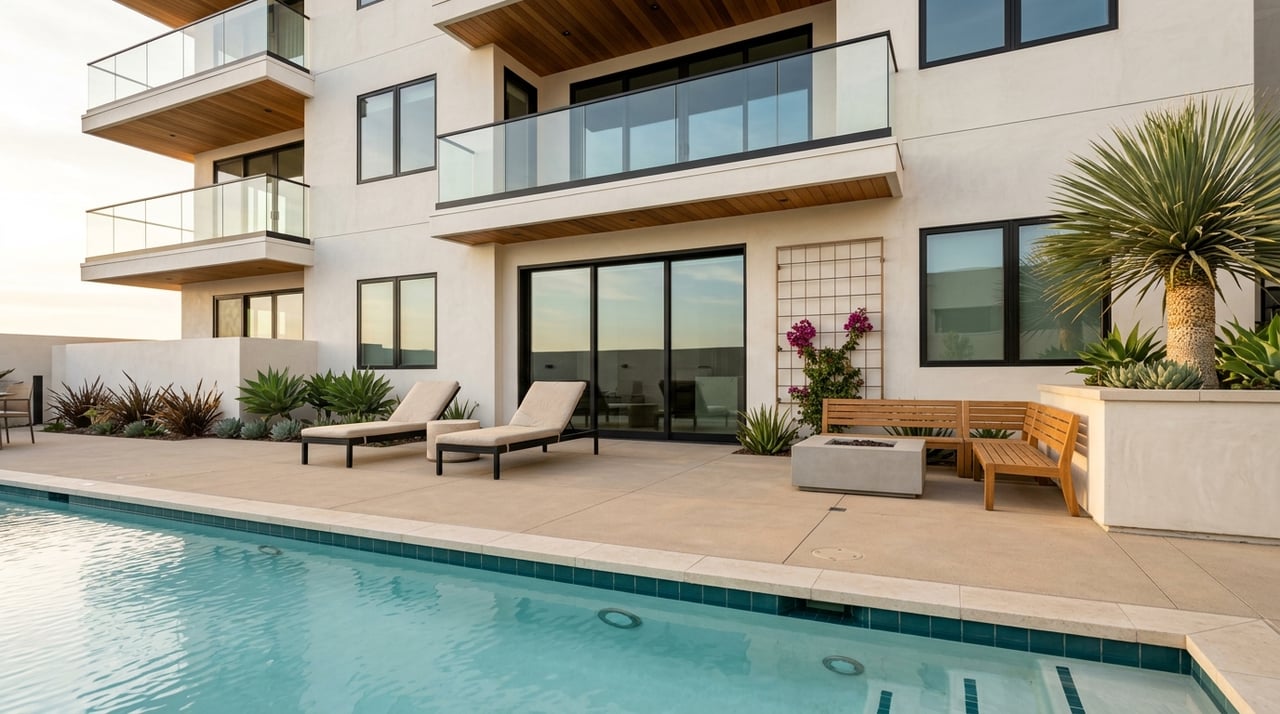
Is Solana Beach Condo Living the Right Coastal Fit?
June 11, 2026
June 11, 2026
If your idea of coastal living is less about yard work and more about morning walks to the sand, Solana Beach condo living may feel like a smart fit. This small coastal city offers beach access, local amenities, and a connected day-to-day lifestyle without the upkeep that often comes with a larger home. If you are weighing a primary residence, second home, or lock-and-leave beach property, this guide will help you understand what condo life in Solana Beach really looks like. Let’s dive in.
Solana Beach is a compact coastal city of about 13,000 residents across roughly 3.5 square miles. It has 1.7 miles of coastline and a mild climate, with average temperatures around 62°F in winter and 77°F in summer. That combination helps create an easygoing coastal rhythm that appeals to a wide range of buyers.
The city describes Solana Beach as a place where families, young professionals, and retirees enjoy urban amenities along Cedros Avenue and Historic Highway 101 while living in a smaller beach-oriented setting. For you as a buyer, that often means you can enjoy a coastal lifestyle with shops, dining, cultural venues, and beach access all close together. In a condo, that convenience becomes a major part of the value.
Much of the appeal comes down to how usable the coastline is in everyday life. Solana Beach has four main beach parks: Fletcher Cove, Tide Beach Park, Seascape Surf, and Del Mar Shores. The city’s Marine Safety Department manages beach, ocean, and bluff safety along the coastline, which adds an important layer of oversight to the beach environment.
Fletcher Cove is one of the clearest examples of practical coastal access. It offers public access at the end of Lomas Santa Fe Boulevard, along with parking, showers, restrooms, picnic tables, and year-round lifeguards. It is also just a few hundred yards from the Solana Beach train station, which serves Amtrak and COASTER.
That matters if you want a home that feels coastal but still connected. A condo near this area can support a lower-drive lifestyle, whether you are commuting part-time, hosting weekend guests, or simply looking for a second home that is easy to enjoy and easy to leave.
It helps to understand that Solana Beach offers a more natural and constrained shoreline than a wide resort-style beachfront. According to the city’s Local Coastal Program, the beaches are narrow, lateral access can be limited at high tide, and public access depends on a limited number of stair and ramp connections. That does not reduce the appeal, but it does shape the experience.
In practical terms, beach living here is scenic, walkable, and highly desirable, but it is not defined by a broad boardwalk setting. If you value blufftop views, nearby access points, and the ability to step into a true coastal environment, Solana Beach delivers that well. It is simply important to know what kind of coastline you are buying into.
Condo buyers are often looking for more than a home. They are looking for an easier lifestyle. Solana Beach supports that with a mix of local destinations and transportation options that make everyday errands and outings feel more manageable.
The city points residents and visitors toward Cedros Avenue and Historic Highway 101 for shopping, dining, arts, and community gathering spots. Local highlights include the Cedros Avenue Farmers’ Market, the Cedros Design District, nearby beach access, and Belly Up Tavern. For you, that can translate into a more walkable, interesting routine without needing to leave town for every activity.
Solana Beach also supports car-light living better than many coastal communities. The city highlights bike, bus, and rail options, including COASTER and BREEZE service. Main access routes include Interstate 5, Highway 101, Lomas Santa Fe Drive, and Via de la Valle, which help keep the city connected to the rest of Coastal North San Diego.
Many Solana Beach condos tend to live more like compact homes than small beach crash pads. Recent listing examples show a common range of about 1,000 to 1,400 square feet, often with 2-bedroom, 2-bath or 2-bedroom, 2.5-bath layouts. That size range can work well if you want comfort, flexibility, and manageable upkeep.
Inside, many condos feature open-concept kitchens and living areas, balconies or decks, in-unit laundry, updated finishes, and assigned or garage parking. Some also include office nooks or loft space, which can be helpful if you work from home part of the week or need a little extra functionality.
Shared amenities are often part of the draw as well. Depending on the community, you may find pools, spas, tennis or pickleball courts, clubhouses, game rooms, exercise rooms, gated access, or direct beach access. In many cases, the lifestyle value comes not just from the unit itself, but from the combination of location, shared amenities, and outdoor setting.
Solana Beach condo living tends to work best for buyers who want access and convenience more than lot size or privacy. If you are a downsizer, a relocation buyer, a second-home shopper, or someone who wants a lock-and-leave coastal base, this lifestyle can make a lot of sense. It can also appeal to buyers who want to stay near the coast without taking on the maintenance of a detached property.
That said, the fit depends on how you live. If your top priorities are outdoor space, separation from neighbors, or no community rules, a condo may not give you what you want. The right buyer is usually someone who sees value in shared amenities, easier upkeep, and a location-first lifestyle.
When you buy a condo in California, you are usually buying into a common interest development governed by the Davis-Stirling Common Interest Development Act. In general, the homeowners association is responsible for maintaining and repairing common areas, while you are responsible for your separate interest. Some exclusive-use areas may involve shared or split responsibility depending on the governing documents.
That is why HOA dues deserve careful attention. They are not just another bill. They help fund maintenance, management, insurance, and reserves for future repairs.
Before you buy, review the HOA documents closely. California law requires annual budget reporting, insurance summaries, and reserve funding disclosures as part of the annual budget report. The reserve summary should show projected reserve balances and funding assumptions, which can help you understand whether the community appears to be planning responsibly for future costs.
Regular HOA dues are only part of the picture. The California Department of Real Estate buyer guidance explains that regular assessments fund operations and reserves, while special assessments can be charged for major repairs or unexpected costs. Without member approval, special assessments in a fiscal year generally cannot exceed 5 percent of the association’s gross budgeted expenses.
Insurance also deserves a close read. The required HOA insurance summary is helpful, but it is not the same as reading the actual policies. State-required disclosures warn that HOA coverage may not fully cover personal property, interior improvements, or every deductible, so you will want to understand where the association’s policy ends and your own coverage should begin.
If you are considering a Solana Beach condo as a part-time residence or future income property, rental rules should be checked early. In Solana Beach, there is a permit process for residential rentals of 7 to 30 consecutive days, including condos and other multifamily buildings. Rentals of fewer than seven consecutive days are prohibited in residential zoning districts.
That is only one layer of the analysis. You also need to review the HOA’s CC&Rs and rules because the association may have its own rental restrictions or approval requirements. If rental flexibility is part of your buying strategy, verifying both the city rules and HOA documents before you buy is essential.
The biggest benefit of condo living in Solana Beach is access. You may gain proximity to the beach, nearby amenities, transit, and shared features that would be difficult or expensive to replicate in a detached home. You may also gain a simpler ownership experience that supports travel, downsizing, or relocation.
The tradeoff is that coastal condo living comes with structure. That means HOA dues, community rules, shared decision-making, and the realities of maintaining property in a coastal environment. The city’s ongoing work on projects like Fletcher Cove improvements and the Coastal Rail Trail is a reminder that this kind of lifestyle depends on active, ongoing upkeep over time.
If you are seriously considering a condo in Solana Beach, focus on the details that shape daily life, not just the photos or view.
A condo can be a great coastal fit when the property, the HOA, and your lifestyle all line up. The key is looking beyond the listing and understanding how the community actually functions.
If you are exploring coastal condos in Solana Beach or comparing them with other North County options, FW Property Group can help you evaluate the lifestyle, ownership costs, and day-to-day fit so you can move forward with confidence.
Stay up to date on the latest real estate trends.


We pride ourselves in providing personalized solutions that bring our clients closer to their dream properties and enhance their long-term wealth. Contact us today to find out how we can be of assistance to you!