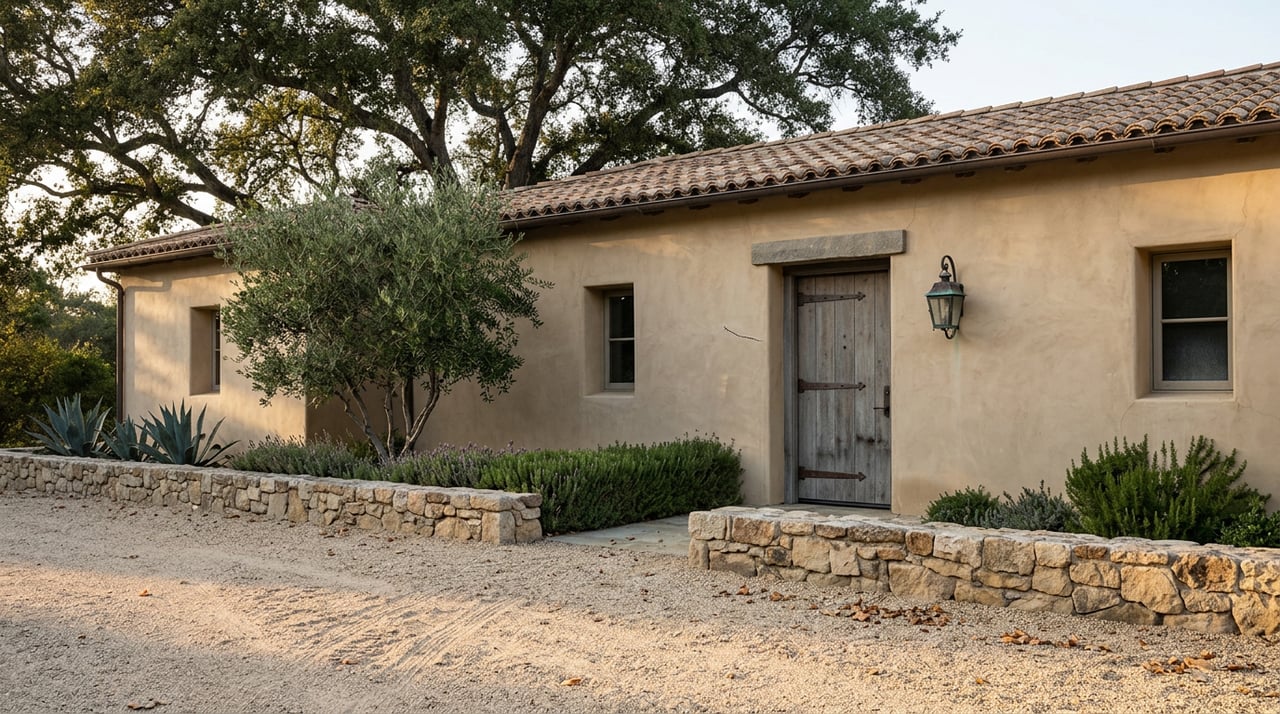
What Rancho Santa Fe Association HOA Dues Mean for Buyers
August 20, 2026
August 20, 2026
The monthly statement that lands in a Rancho Santa Fe Covenant mailbox is unlike almost anything else in coastal North San Diego. One line for golf, one for the tennis club, one for whatever was charged at the Ranch clubhouse restaurant, and one for the annual HOA assessment. Two neighbors on the same cul-de-sac, in homes built the same year by the same builder, can open that statement and see two completely different numbers on that last line. Not close. Sometimes off by a factor of four or five.
That gap is not a billing error. It is how the Rancho Santa Fe Association is built to work, and almost nobody explains it to a buyer before they sign.
Most California HOAs charge a flat fee, or a fee tied to lot size or condo square footage. Everyone pays roughly the same for the same amenities, adjusted for unit type. The Rancho Santa Fe Association does something structurally different: it assesses dues as a percentage of each property's county-assessed value. For fiscal year 2026, the year that closed on June 30, 2026, that rate was set at $0.15 per $100 of assessed value, or 0.15 percent, a figure laid out plainly by MyRSF.net, an independent information site run by RSF residents. Compare that to the roughly 1 percent of assessed value you already pay in property tax, and the RSFA assessment looks small in isolation. It stops looking small once you understand what "assessed value" means in California.
Under Proposition 13, a home's assessed value is capped at modest annual growth for as long as the same owner holds title. It resets to the purchase price only when the property changes hands. That single mechanic is the whole story here. A member who bought decades ago and never sold is still being assessed against a value from that era, nudged up a couple of percent a year. A buyer closing today has their assessed value reset immediately to whatever they paid at the courthouse. Because RSFA dues ride directly on that assessed value, the buyer's RSFA bill is set, permanently, by the price on their own closing statement. As MyRSF.net puts it, new members "typically pay far more in RSFA dues than Members who have remained in their houses for decades," a direct consequence of how Prop 13 interacts with a value-based assessment.
Here is what that looks like translated into real numbers, using RSFA's own 0.15 percent rate as the constant:
| Ownership scenario | Approximate assessed value | Annual RSFA assessment (0.15%) | Monthly equivalent |
|---|---|---|---|
| Bought in the 1990s, capped growth since | $900,000 | $1,350 | about $113 |
| Bought five years ago | $2,500,000 | $3,750 | about $313 |
| Closing today at $4,200,000 | $4,200,000 | $6,300 | about $525 |
These are illustrative figures built on the confirmed FY2026 rate, not projections for any specific listing. But the shape of the table is the point. If you're comparing a Covenant home to a house in Del Mar or Carmel Valley with a flat HOA fee, the number on the seller's current statement tells you almost nothing about what you will actually pay. The relevant question during escrow isn't "what does the current owner pay in RSFA dues." It's "what will my own purchase price generate once it becomes the new assessed value."
MyRSF.net notes RSFA is unusual even among California associations for this reason, since it says every other HOA in the state assesses members "the same amount per property or based on objective non changing criteria like condo floor size or lot size." Rancho Santa Fe is the outlier, and it's an outlier that rewards long tenure and quietly taxes a recent purchase.
Dues are only half the picture. Covenant properties also sit under a second layer of oversight that doesn't exist anywhere else in coastal North San Diego: the Art Jury, RSFA's architectural review body. Any exterior work inside the Covenant, from a new build to a significant remodel to many landscape and hardscape changes, needs Art Jury approval in addition to a standard San Diego County building permit. The Rancho Santa Fe Association's own architectural review process spells out the mechanics: applications are queued first-come, first-served, style-check approvals expire after six months, and final plan approvals expire after one year if conditions go unmet.
The Art Jury meets every three weeks, and its authority is not symbolic. A 2015 appellate case, Dolan-King v. Rancho Santa Fe Association, tested how much discretion the Art Jury actually holds when it rejects a design. According to the case summary from FindHOALaw, the court sided with the Association, finding the Art Jury's rejection of a proposed fence and room addition was a reasonable, good-faith effort to preserve architectural consistency with the surrounding neighborhood, and within the scope of authority granted by the Covenant. A homeowner who assumes she can simply out-argue the committee on taste is working from the wrong premise. The standard is written into the recorded Covenant itself, and courts have been willing to defer to it.
None of this means renovation is impossible. It means the timeline and the fee schedule need to be part of the purchase math, not an afterthought discovered after close of escrow. This is exactly the kind of layered review where a buyer benefits from someone who has coordinated Art Jury submissions before, rather than learning the queue and the expiration clocks in real time on their own project.
The FY2026 numbers above aren't the end of the story. RSFA's fiscal year runs July 1 through June 30, which means the current fiscal year, FY2027, started on July 1, 2026, about six weeks before this was written. At the Association's May 2026 annual meeting, the Board approved a budget for that new fiscal year with total projected revenue of about $34 million against roughly $31.6 million in operating expenses, according to reporting from the Rancho Santa Fe Post. Member assessments were budgeted to rise 3.5 percent for FY2027, pushing total assessment revenue to approximately $10.96 million, even as Golf and Tennis Club enrollment fees were projected to fall 9.1 percent, continuing a decline from $3.4 million in FY2025.
The same reporting flagged a cautionary example worth knowing if you're weighing how disciplined RSFA's spending actually is: the Golf Club restaurant renovation, where the Rancho Santa Fe Post found that incremental design and consulting costs, "$40,000 here, $50,000 there," added up to nearly $1 million before architectural plans were even submitted for review. Separately, in January 2026, the Board approved resolutions that shifted more design-review authority for Association-sponsored common area projects away from Art Jury oversight and toward Board discretion, a change the Rancho Santa Fe Post reported creates two different review tracks, one for homeowners and one for the Association itself. Individual homeowner projects still go through the Covenant's full Art Jury and appeal process. But the fact that governance and cost discipline over shared capital projects are live, contested issues right now matters for anyone trying to forecast where the 3.5 percent annual increase trend goes next.
If you're pricing Rancho Santa Fe against Del Mar, Encinitas, or Carmel Valley using a portal's HOA field, you're comparing a fixed number to a variable one. The seller's current dues are a function of when they bought, not what the amenities cost to run. Before writing an offer on a Covenant property, three things belong in escrow diligence rather than after closing: confirm Covenant status directly against the deed and legal description, since not every Rancho Santa Fe mailing address is inside the Covenant, request a current statement of RSFA assessments and any unpaid balances, and run your own dues estimate off your actual offer price rather than the seller's number.
California HOA law also caps how fast regular assessments can rise without a member vote, at 20 percent year over year on a dollar basis, and limits special assessments to 5 percent of the association's annual budget without a vote, per the analysis on MyRSF.net. That's a ceiling, not a promise. A 3.5 percent increase this year is well inside that ceiling, and there's room for it to move faster in a year with heavier capital needs.
This is the kind of detail that rarely survives a portal listing or a quick market comparison, and it's exactly where working with a broker who tracks RSFA's own board minutes and budget presentations, rather than relying on a median price alone, changes the quality of your offer.
Does every home with a Rancho Santa Fe mailing address pay RSFA dues? No. Only property inside the historic Covenant, roughly 6,200 acres governed by the Protective Covenant recorded in the 1920s, pays RSFA assessments. Other communities that share the Rancho Santa Fe address, including gated associations built around private clubs, are governed by their own separate HOAs.
Is Art Jury approval the same thing as a County building permit? No. They're two separate approvals that both apply inside the Covenant. Interior work generally doesn't require Art Jury review, but a San Diego County building permit is still required. Exterior work, additions, and many landscape changes need both Art Jury sign-off and County permitting, and they run on different timelines.
How do I find out what my actual RSFA dues would be before I make an offer? Ask for a current member statement during escrow and verify the property's current assessed value with the San Diego County Assessor. Your dues will be based on your purchase price once the sale records, not on what the seller has been paying.
Can the RSFA raise assessments sharply without warning? Under California HOA law, a board can raise regular assessments up to 20 percent year over year without a membership vote, and levy special assessments up to 5 percent of the annual budget without one. Increases beyond those thresholds require a vote of the membership.
Rancho Santa Fe rewards patience and penalizes a casual read of the comps. If you're weighing a Covenant estate against another coastal North San Diego neighborhood, FW Property Group can walk you through what a specific address actually costs to hold, not just what it costs to buy. Request your free home valuation and get the real numbers before you write an offer.
Stay up to date on the latest real estate trends.
We pride ourselves in providing personalized solutions that bring our clients closer to their dream properties and enhance their long-term wealth. Contact us today to find out how we can be of assistance to you!